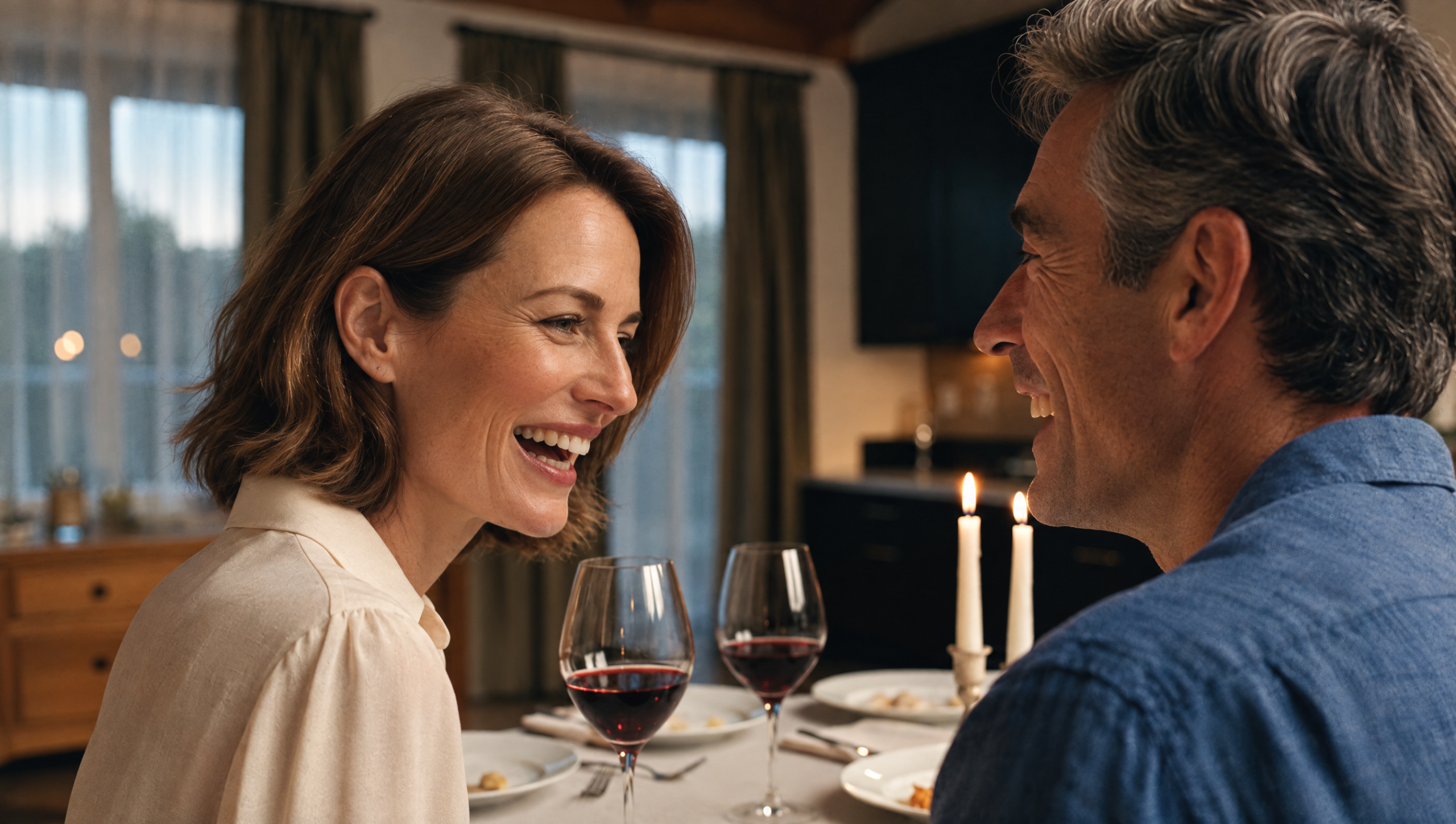
Two glasses of wine, a wonderful dinner and a perfectly reasonable bedtime. So why are you suddenly wide awake at 3 a.m.? The answer involves more than your liver, and some surprisingly interesting changes in how your body handles alcohol, sleep and midlife.
There was a time when two glasses of wine over a long dinner were simply two glasses of wine over a long dinner. You savored the food, enjoyed the conversation, maybe split a dessert, and went to bed feeling perfectly fine.
Then, somewhere along the way, those same two glasses started arriving with uninvited guests: a 3 a.m. wake-up call, a mind racing through tomorrow’s to-do list, and a morning that feels suspiciously like the aftermath of a party you don’t remember attending. What changed? And why didn’t anyone warn you?
If this sounds familiar, you’re in very good company. Plenty of people notice their relationship with alcohol shifting in midlife, as drinks that once felt completely manageable start nibbling away at their sleep, energy and mornings. The interesting part is that there’s no single culprit. Body composition changes, sleep becomes more fragile, hormones join the conversation, and even the timing of dinner and the size of your wineglass play a surprising role.
And before anyone confiscates the Burgundy, this is not an article suggesting that enjoying wine is a character flaw. It’s about understanding why a familiar pleasure can start producing unfamiliar results.
Your body isn’t quite the same container it used to be
Here’s a detail that explains more than you’d expect: alcohol travels mainly through the water in your body. Muscle holds a lot more water than fat does, and as we age, many of us gradually lose some muscle and some total body water.
The result is that two people of different ages can drink exactly the same amount and end up with different blood alcohol levels. The National Institute on Alcohol Abuse and Alcoholism notes that older adults often reach higher blood alcohol concentrations than younger adults after drinking the same amount, partly because of these changes in muscle and body water.
That doesn’t mean something dramatic happens the morning of your 40th birthday. Aging is gradual, people vary enormously, and a fit, strong 55-year-old may have a very different body composition than a sedentary 35-year-old. (Yet another quiet argument for strength training.) But it does mean your old instincts about how much you can comfortably handle aren’t guaranteed to stay accurate forever.
The amount in the glass may be identical. The body receiving it may not be.
For women, there’s an extra twist. Alcohol starts being broken down before it even leaves the stomach, thanks to an enzyme called alcohol dehydrogenase, and some research has found lower stomach enzyme activity in women than in men. Combined with typically lower body water, that helps explain why women often reach higher blood alcohol levels than men after consuming the same amount, even at the same weight. It isn’t a matter of willpower or “holding your liquor.” It’s plumbing.
Your liver hasn’t forgotten how to do its job
You’ve probably heard someone blame a worsening hangover on the classic line: “Your metabolism slows down as you get older.” It’s a tidy explanation, but an incomplete one.
Your liver uses a pair of enzymes, alcohol dehydrogenase and aldehyde dehydrogenase, to break alcohol down, first into a compound called acetaldehyde and then into acetate, which the body can metabolize further. Those systems don’t simply clock out in midlife. How you process alcohol depends on a whole cast of factors: your body composition, liver health, genetics, medications and drinking patterns.
Genetics alone can make a huge difference. Hundreds of millions of people, many of East Asian descent, carry a gene variant that slows the breakdown of acetaldehyde, which is why even a single drink can leave some people with facial flushing and a pounding heart. It’s a vivid reminder that “tolerance” is as much biology as experience.
But here’s the twist most people miss: when someone says they “suddenly can’t tolerate wine anymore,” the issue may not be primarily how fast their body clears the alcohol. It’s what the alcohol is doing to their sleep. And that brings us to the real troublemaker.
The first half of the night is a very convincing liar
One of alcohol’s most impressive tricks is convincing you it’s helping you sleep. A glass or two can feel deeply relaxing. You get drowsy, you drift off faster than usual, and it seems like mission accomplished.
Except falling asleep and sleeping well are two very different biological achievements.
A 2025 systematic review and meta-analysis in Sleep Medicine Reviews pooled 27 studies on alcohol and sleep and found that alcohol disrupts the normal structure of the night, especially by delaying and reducing REM sleep, the dream-rich stage involved in emotional processing, learning and memory. Strikingly, this wasn’t limited to heavy drinking. The changes appeared even at relatively low doses and grew more pronounced as intake climbed.
REM is just one part of a carefully choreographed cycle of sleep stages that repeats throughout the night, and alcohol throws off the choreography. That’s how you can fall asleep easily, stay in bed a full eight hours, and still wake up feeling oddly unrested, as if you’d slept in a waiting room.
Alcohol can make the beginning of your night feel easier while making the rest of it far less restorative. It’s a rather questionable bargain.
Why 3 a.m. becomes a recurring appointment
Here’s where it gets especially relatable. As alcohol’s initial sedating effect wears off, the second half of the night often becomes fragmented. Your body is busy processing the alcohol while your nervous system and natural sleep machinery try to rebalance, and you can end up sleeping more lightly and waking more easily. Some people notice a racing heart, feel too warm, or face a sudden and deeply inconvenient urge to visit the bathroom.
A 2024 experimental study in the journal Sleep tracked people who drank alcohol before bed on three nights in a row and found significant changes in sleep architecture, including reduced REM sleep. That pattern goes a long way toward explaining the familiar experience of drifting off pleasantly relaxed, only to find yourself staring at the ceiling a few hours later, wondering whether you remembered to reply to that email.
There isn’t one mysterious 3 a.m. hormone surge to blame for every awakening; alcohol disrupts sleep through several overlapping mechanisms, and the effects depend on how much you drank, when, and your own physiology. But the overall pattern is well established. The wine is excellent at announcing bedtime. It’s much less reliable about staying out of the way afterward.
THE NUMBER THAT GOT OUR ATTENTION: 27 STUDIES
A 2025 meta-analysis of 27 studies found that alcohol disrupted REM sleep even at relatively low doses, and that the disruption generally grew as people drank more.
Here’s why that matters: alcohol’s effects aren’t measured only by whether you fall asleep easily or remember waking up. You can believe you slept perfectly well while alcohol quietly rearranged what your sleeping brain was doing.
Midlife sleep is already a little less forgiving
Here’s another piece of the puzzle. Sleep changes with age even without a single sip. Many of us get less deep sleep, wake more often during the night, and find it harder to stay asleep than we did in our 20s. That doesn’t mean everyone over 50 sleeps badly. It means sleep becomes more vulnerable to anything that pokes at it.
Add alcohol to an already delicate night, and effects that used to be barely noticeable suddenly become impossible to ignore. Throw in the usual midlife extras, like stress, travel, late dinners, medications, snoring or undiagnosed sleep apnea, and the picture gets even more complicated.
So sometimes the issue isn’t that alcohol has become dramatically stronger. It’s that your sleep has become a lot less willing to negotiate with it.
And then there’s the hormone conversation
For women, perimenopause and menopause add yet another layer. Estrogen and progesterone help regulate sleep and body temperature, and as they fluctuate during the menopausal transition, many women experience night sweats, hot flashes and more frequent awakenings. Since alcohol also affects body temperature and sleep, it’s no surprise that many women feel their wine tolerance shifting during these years.
But the research is more nuanced than the popular claim that menopause automatically makes alcohol intolerance worse. A 2026 scoping review of 57 studies found mixed results linking alcohol to menopausal symptoms like disrupted sleep and hot flashes. Some women find alcohol is a clear trigger, while others notice little effect at all.
The takeaway isn’t that every woman has to retire her evening wine the moment her hormones start shifting. It’s that alcohol may interact with an already-changing sleep and symptom picture, and your individual response is what matters most.
And men, you’re not off the hook. Changes in body composition, sleep quality, medications and overall health can change how alcohol feels for men too. This is a midlife conversation, not just a menopause one.
Why the morning feels worse than the evening deserved
You wake up, and something’s just off. Maybe there’s a headache. Maybe your energy is flatlining and your coffee seems to be working overtime. Or maybe you’re experiencing that uniquely modern combination of feeling physically exhausted while your brain has decided to be anxious about absolutely everything.
Alcohol contributes to the morning after through several routes. It’s a diuretic, so it ramps up urine production and fluid loss. It can irritate your digestive system. And breaking it down produces acetaldehyde, a biologically active compound behind many of alcohol’s toxic effects.
But here’s the part that matters most for people who weren’t drinking anywhere near “hangover” territory: the previous night’s disrupted sleep may simply have left you less restored. Not every symptom is dehydration, and a big glass of water won’t undo alcohol’s effects on your sleep.
Sometimes the problem is just that your brain didn’t get the night it was expecting, which feels a little unfair considering how lovely dinner was.
Before we blame age, let’s talk about the glass
One of the least glamorous but most useful parts of this conversation is knowing what actually counts as “a drink.”
In the U.S., a standard glass of wine is 5 ounces at 12% alcohol. That may not be the pour you’re getting at a restaurant, or the one you’re pouring at home.
And here’s a fun fact that might explain a lot: wine glasses have gotten enormous. Researchers at the University of Cambridge measured English wine glasses going back to the 1700s and found their average capacity had grown roughly sevenfold, from about 66 milliliters to around 450 milliliters by 2017. Our great-great-grandparents would think we were drinking out of fishbowls. A bigger glass doesn’t guarantee a bigger pour, of course, but it certainly leaves room for one.
Meanwhile, many wines run well above 12% alcohol. Do the math on a 6-ounce pour of a 14.5% Cabernet and you’ve got roughly one and a half standard drinks in a single glass. Two of those add up to approximately three standard drinks.
So two glasses aren’t necessarily two standard drinks, especially over a long dinner where someone occasionally tops you off. No judgment, just chemistry. And it might explain why one evening feels completely different from another, even when both seemed to involve the same number of glasses.
Does red wine really make a difference?
Wine lovers will appreciate this one, because not every drinking experience feels the same. Plenty of people swear that red wine gives them headaches or flushing more readily than white wine or cocktails.
There may be something to it. Histamine, other compounds in wine and individual sensitivities may all play a role, although many popular explanations, especially sweeping claims about sulfites, are oversimplified. (Fun fact: many dried fruits contain far more sulfites than a glass of wine.)
Still, the alcohol itself remains the main event, whether it arrives in a fine Burgundy, a California Cabernet or a margarita. Red wine does contain polyphenols that have caught scientists’ interest, but they don’t cancel out the effects of the ethanol riding alongside them.
A great wine can have a fascinating history, remarkable complexity and a gorgeous finish. It’s still alcohol. Both things can be true.
THE SEPTEMBER TAKE
One of the more freeing realizations of midlife is that you don’t necessarily have to give up the things you love. Sometimes you just need to understand how your body responds to them now.
Alcohol affects far more than whether you feel tipsy. It interacts with your body water, your sleep architecture, your temperature regulation and your nervous system, and those interactions can become more noticeable as we age.
The question isn’t whether you can still enjoy two glasses of wine at dinner. It’s whether you like how you feel afterward, and whether the experience is still worth the trade.
That’s a far more useful question than judging an evening by the number of glasses on the table.
What about the bigger health picture?
There’s one distinction worth making before we get practical: feeling perfectly fine after drinking doesn’t mean alcohol carries no long-term risks.
Alcohol is linked to higher risks of several cancers, including breast and colorectal cancer, and choosing wine over other drinks doesn’t erase that. Having wine with dinner every evening also represents a different pattern of exposure from enjoying it occasionally at a long dinner. Both the amount consumed and how frequently you drink matter when considering long-term health risks. Public health guidance generally favors less alcohol rather than more, especially for people with certain medical conditions or risk factors.
But a sensible conversation about health can acknowledge those risks while respecting that people make choices for lots of good reasons, including pleasure, culture and connection. We don’t need to pretend a wonderful dinner with friends has no value. We just shouldn’t pretend alcohol’s effects disappear because the wine was excellent.
Do this week
1. Notice the second half of your night.
If you tend to wake at 3 a.m. after wine with dinner, look for a pattern. The timing, the amount, your bedtime and how you feel the next day may tell you more than counting headaches ever could.
2. Meet your real pour.
Measure out 5 ounces in the glasses you actually use. Many people are genuinely surprised at how small a standard serving looks, especially in a modern glass.
3. Play with timing.
Compare how you sleep after an early dinner versus a late one. Finishing your last glass earlier may ease some nighttime effects, though it won’t erase them entirely.
4. Learn your personal triggers.
If certain wines, occasions or food-and-drink combinations consistently leave you feeling worse, that pattern is valuable information.
5. Protect the mornings that matter.
Big workout, early flight or important meeting? Weigh whether the evening’s pleasure is worth the possible hit to your sleep and energy. Sometimes the evening wins. Sometimes the morning deserves to.
You don’t need an elaborate tracking system. You just need to notice the difference between enjoying what you’re drinking and enjoying how you feel afterward.
This article is for educational purposes and does not constitute medical advice. Alcohol consumption carries health risks, including increased cancer risk. Individual responses vary, and people who are pregnant, take medications that interact with alcohol, have certain medical conditions or have difficulty controlling alcohol use should seek appropriate medical guidance. Do not abruptly stop drinking without medical advice if you may be physically dependent on alcohol.
Sources & Further Reading
- Gardiner C, Weakley J, Burke LM, et al. The effect of alcohol on subsequent sleep in healthy adults: A systematic review and meta-analysis. Sleep Medicine Reviews, 2025.A systematic review and meta-analysis of 27 studies examining alcohol’s effects on sleep, including dose-dependent disruption of REM sleep even at relatively low levels of consumption.
- McCullar KS, Barker DH, McGeary JE, et al. Altered sleep architecture following consecutive nights of presleep alcohol. Sleep, 2024.An experimental study involving 30 adults that examined alcohol consumption before bedtime over three consecutive nights, finding changes in sleep architecture and reductions in REM sleep.
- Shihab S, Islam N, Kanani D, et al. Alcohol use at midlife and in menopause: A narrative review. Maturitas, 2024.A review exploring the relationship between alcohol consumption, the menopausal transition, sleep disturbances, vasomotor symptoms and other aspects of women’s midlife health.
- Teixeira FMAA, Picior M, Ajewole O. The Relationship Between Menopause, Perimenopause and Alcohol Use: A Scoping Review. 2026.A scoping review examining 57 studies on alcohol use during perimenopause and menopause, highlighting the complex and sometimes inconsistent relationships between drinking and menopausal symptoms.
- National Institute on Alcohol Abuse and Alcoholism. Aging and Alcohol. National Institutes of Health.Explains how changes in muscle mass, total body water, medication use and other age-related factors can influence alcohol sensitivity and blood alcohol concentrations.
- National Institute on Alcohol Abuse and Alcoholism. What Is a Standard Drink? National Institutes of Health.Defines standard alcohol servings, including five ounces of wine at 12% alcohol by volume, and explains why serving size and alcohol concentration both matter.
- Zupan Z, Evans A, Couturier DL, Marteau TM. Wine glass size in England from 1700 to 2017: A measure of our time. BMJ, 2017.University of Cambridge research documenting a roughly sevenfold increase in average wineglass capacity over three centuries, from approximately 66 milliliters in the 1700s to around 450 milliliters by 2017.
- Centers for Disease Control and Prevention. Alcohol and Cancer. CDC.An overview of the established associations between alcohol consumption and several cancers, including breast and colorectal cancer, regardless of the type of alcoholic beverage consumed.