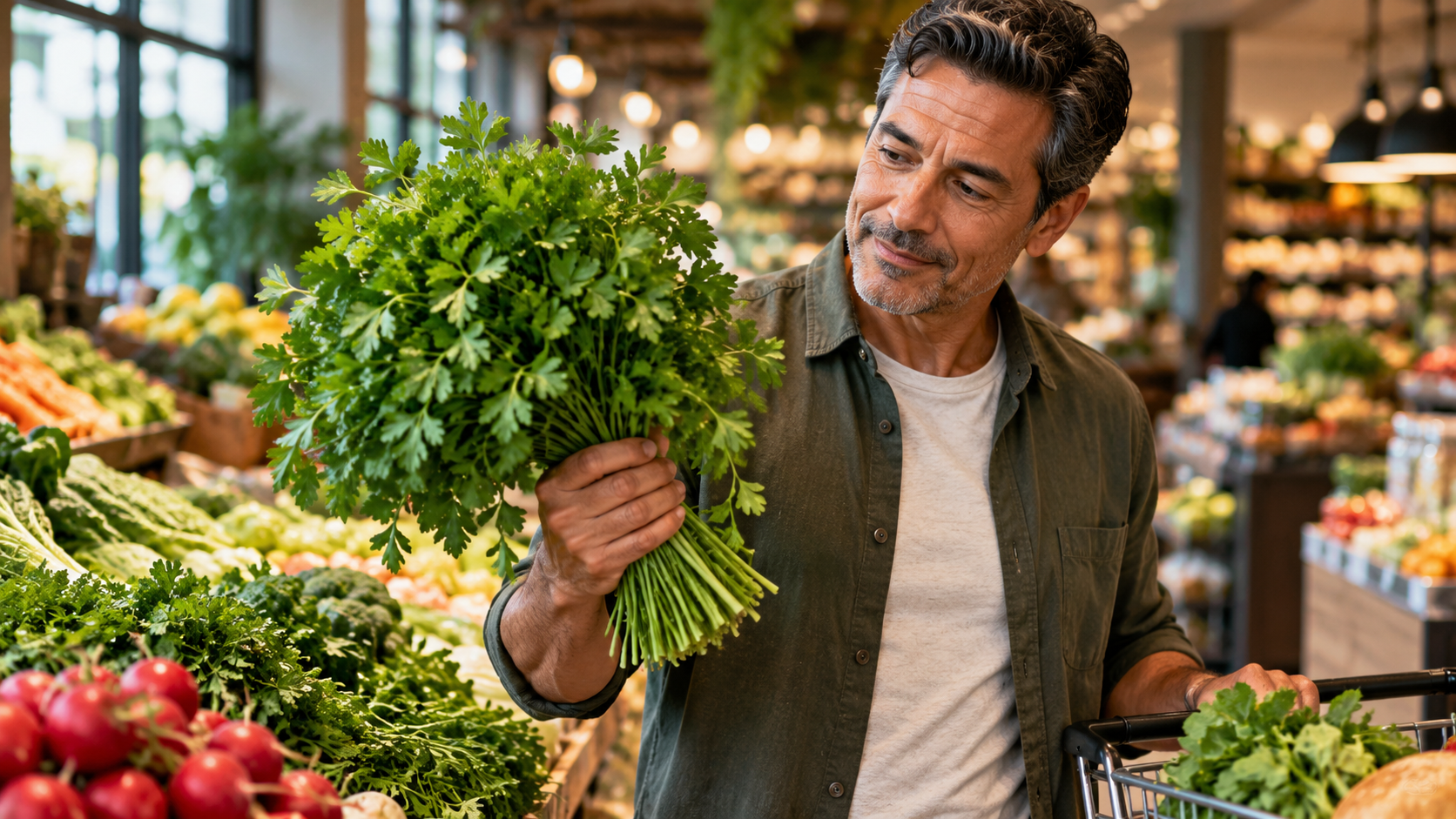
We still love gorgeous ingredients, great meals and nights out. But between smaller households, bigger grocery bills and a social life that refuses to follow the meal plan, eating well after 50 has gotten surprisingly expensive.
There’s a weird financial penalty for loving good food after 50. And I say that as someone who has long joked that restaurants are my hobby.
You still adore beautiful ingredients. You still love to cook. You may even be a far better cook than you were 20 years ago, with more confidence, sharper knives and a genuinely impressive collection of olive oils.
But your household is smaller. Your social calendar is less predictable. And the grocery store still insists you buy enough parsley to supply a small restaurant.
So you spend $150 on ingredients for a week of wonderful meals, go out to dinner twice, cook exactly once, and then discover that half your produce has launched its own science experiment in the crisper drawer.
Here’s the uncomfortable truth: we’re running two food lifestyles at once, and paying for both.
The grocery store gets our money because we love to cook. Restaurants get our money because we love to go out. And the refrigerator gets whatever’s left of our good intentions.
The funny thing is, our standards haven’t changed. We still want fresh food, beautiful meals and the joy of having people over. What’s changed is how many people we’re feeding, how often we’re actually home, and whether the food industry has any interest in accommodating that. (Spoiler: it does not.)
Gen X Is Not Staying Home With a Frozen Dinner
There’s a common assumption that young people are the ones keeping restaurants alive. Millennials and their brunch. Gen Z and their latest hot spot. Everyone under 35 ordering breakfast through an app before getting out of bed.
There’s some truth to that. According to Datassential’s 2026 research, 36 percent of Gen Z’s meals come from outside the home, compared with 31 percent for Millennials, 26 percent for Gen X and 18 percent for Baby Boomers. Young people really do lean on other people’s kitchens more.
But here’s the part that deserves attention. A 2025 ICSC report built on a big retail-spending analysis found that Gen X accounts for nearly one-third of all full-service restaurant spending, and generates twice the restaurant revenue per shopper that Boomers do. The American Customer Satisfaction Index’s 2026 restaurant study also found that more Gen X customers said they were spending more on dining out than the year before.
In other words, we may not go out the most often. But when we go out, we go out. There’s a big difference between grabbing a quick lunch and making an evening of it: the new restaurant you’ve been dying to try, a great bottle of something, a couple of friends and zero interest in rushing home.
Not every Gen Xer lives like that, of course. Plenty of people are cutting back on restaurants as prices climb. But for those of us who love both cooking and going out, there’s a sneaky problem. Our restaurant habits evolved. Our grocery habits never got the memo.
Cooking for One Isn’t Half the Work. Cooking for Two Isn’t Half the Cost.
Anyone who’s gone from cooking for a family to cooking for one or two (hi) knows this in their bones: fewer people at the table doesn’t mean proportionally less work.
You still have to shop. You still need all the ingredients. You still wash the cutting board, heat the oven, chop the vegetables, season the protein and clean the kitchen. You’ve just done all of that for one plate.
And the math isn’t any friendlier. Say a recipe calls for fresh basil, parsley, lemons, Parmesan and a couple of vegetables. Whether you’re cooking for one or four, you’re buying the same bunch of parsley, the same clamshell of basil and the same wedge of cheese. A recipe needs two tablespoons of something sold in a package of twenty. For a family of four, that gets used up fast. For one person, it becomes another tiny guilt trip waiting in the fridge.
This isn’t really a portion-control problem. It’s a purchasing problem.
And here’s a fact that genuinely surprised me: the USDA builds a small-household penalty right into its official grocery budgets. Its food-cost estimates are based on a four-person household, and when it calculates costs for smaller ones, it adds 20 percent for a single person and 10 percent for a two-person household.
The federal government has officially acknowledged that feeding fewer people doesn’t save you as much as it should. That doesn’t mean every shopper pays exactly that much more. But it’s a pretty telling admission that the whole system is built for bigger families.
We have smaller households living in a food economy designed for larger ones. And nobody, anywhere, is willing to sell us seven sprigs of parsley.
That $150 Receipt Is Really a Receipt for Your Good Intentions
Something magical happens the moment we walk into a grocery store. We become people who will absolutely wash the lettuce, portion out the chicken, pack beautiful lunches and finally make that recipe we saved back in February. We’re going to eat well! We’re going to be organized! We’re going to cook from scratch, use every last scrap and somehow get dinner on the table without it becoming an all-night production.
And standing there in the produce section, we believe every single word.
There’s nothing fake about those intentions. We genuinely love food. We genuinely want to cook. There’s real pleasure in imagining the meals we’re going to make.
But then the week actually happens. Someone suggests dinner out. An appointment runs late. A friend calls. Or we just don’t feel like doing all the prep for the gorgeous dinner we pictured on Sunday.
Now the salmon is a deadline. The herbs are a responsibility. And the refrigerator has become a museum of promises we made to ourselves.
None of this means we’re eating badly or losing interest in cooking. We’re just living lives that are less predictable than our shopping lists.
We shop for the week we imagine, not the week we’re actually going to have. And then, instead of adjusting, we march right back and do it again. It’s wonderfully optimistic. Financially, it’s a lot less charming.
The Grocery Store Has Every Reason to Make You Overbuy
This isn’t all in our heads, though. Part of it is how food is sold to us.
In 2025, researchers Christina Gravert and Milica Mormann published a study in Scientific Reports that tracked 43,246 purchases of fresh vegetables across eight supermarkets. They compared multi-buy deals, like “2 for $5,” with simple discounts offering the exact same price per item.
The multi-buy deals boosted the number of vegetables sold by 19.5 percent, just because of how the offer was worded. And follow-up research found that the extra food people bought because of those promotions was less likely to actually get eaten.
Think about the irony. You go shopping determined to be responsible. You grab the deal. You bring home more food for what looks like a better price. Then you throw some of it away. The store sold more groceries, you spent more money, and you managed to feel both thrifty and wasteful in a single transaction. That takes talent.
Buying in bulk absolutely makes sense for things you use all the time, especially foods that freeze or keep well. But a discount on something perishable only saves money if you eat it.
The supermarket measures success by what leaves the store. We should measure it by what actually gets eaten.
Here’s the Controversial Part: Cooking From Scratch Isn’t Always Cheaper
We’ve all been taught that the responsible, frugal thing to do is buy whole ingredients and make everything ourselves. And when you’re feeding a crowd, that’s usually true.
But for one or two people? Not necessarily.
Picture this. You spend $9 on fresh vegetables for a recipe, use half and eventually toss the rest. The vegetables you ate didn’t cost $4.50. They cost $9. Now picture spending $6 on a smaller package of prewashed, prechopped vegetables and eating every bite. The second option costs more per ounce, but less for what actually ended up on your plate.
That’s a made-up example, and prepared vegetables are often more expensive. But it shows something that most grocery budgeting advice completely misses: the cheapest ingredient isn’t always the cheapest meal.
And then there’s your time. A rotisserie chicken, a bag of prewashed greens or a small tray of prepped vegetables might not be the cheapest thing on the shelf. But if it means you actually cook a good dinner instead of letting a pile of raw ingredients quietly die in the fridge, the value changes completely.
There are limits, of course. Delivery fees, restaurant tabs and convenience foods can add up fast, and “prepared” doesn’t always mean “just as nutritious.”
The point isn’t that convenience always wins. It’s that we need to stop treating the amount of labor that went into a meal as a measure of how virtuous it was. Sometimes paying a little more to make a good meal actually happen is the smartest money you’ll spend all week.
The Fridge That Could Survive the Apocalypse
There’s another strange thing about smaller households: a lot of us are still running kitchens built to feed a much bigger crowd.
The pantry is packed. The freezer is packed. We own enough condiments to cook our way through several international cuisines, and probably enough frozen protein to ride out a minor collapse of the national food supply.
And yet, at 6:30 on a Tuesday, we stand in front of the open fridge with absolutely no idea what to eat.
How is that even possible? Because having food and having dinner are two completely different things. The freezer may be full of beautiful ingredients, but turning them into a meal means deciding what to make, thawing it, cooking it and actually wanting to eat the result. Sometimes we have the food but not the time. Sometimes we have the time but not the energy. And sometimes the meal we’re craving requires the one ingredient we don’t have, despite owning roughly everything else on Earth.
A well-stocked kitchen can be a real joy. It makes entertaining easier and lets you cook on a whim. There’s nothing wrong with abundance. But there’s a difference between a pantry that supports how you live now and an inventory that belongs to an earlier version of your household. One is useful. The other is a very expensive storage unit for your culinary ambitions.
We’re Paying for Two Food Lifestyles, and Prices Are Rising on Both
Step back and look at the bigger picture. We still want great groceries. We still love to cook and entertain. But we also love restaurants, travel, dinners with friends and the freedom to change our plans at the last minute. Neither lifestyle is unreasonable. It’s the combination that gets pricey, especially now, when an uncertain economy and a little less stamina for nights out have a lot of us, me included, eating at home more than we used to.
And the latest numbers don’t help. In the government’s September 2026 inflation report, grocery prices were up 1.8 percent from a year earlier, while restaurant prices rose 3.5 percent, and sit-down, full-service meals rose even more, at 3.8 percent. But here’s the kicker for anyone with a crisper drawer full of good intentions: fruits and vegetables rose 3.7 percent. The very things most likely to go bad in your fridge are among the things getting more expensive the fastest.
So the problem isn’t necessarily that we go out too much or spend too much on beautiful ingredients. It’s that we budget as if those two things never overlap. A household that plans to cook five nights a week but ends up going out three nights has already paid for ingredients that will never get used. The real cost of that restaurant dinner isn’t just the bill. It’s also the abandoned meal sitting at home.
That’s where traditional grocery advice starts to feel weirdly outdated. Plan every dinner! Shop from a list! Prep everything on Sunday! Perfectly sensible, if your life reliably follows that schedule. But what if the problem isn’t a lack of discipline? What if the whole planning system just assumes a predictability that doesn’t describe how we live anymore?
The Better Question Isn’t “What Should I Cook?” It’s “How Often Will I Actually Be Home?”
Here’s my radical idea: before you plan your meals, look at your social calendar. Not the other way around.
If you’ve already got dinner plans Tuesday, might go out Friday and know Thursday is going to be a beast, why are you buying ingredients for seven elaborate dinners?
Instead, try this:
- Plan two beautiful meals you’re genuinely excited to cook.
- Add one flexible meal that can wait a few days without spoiling.
- Buy the fresh fish only for a night you know you’ll cook it.
- Keep quick-to-spoil produce to amounts you’ll realistically use.
- Stock a few long-lasting ingredients for spontaneous cooking.
- Don’t underestimate good frozen food for when plans change.
This isn’t about lowering your standards or settling for boring food. It’s about giving yourself the freedom to cook beautifully when you want to, without your refrigerator sending you increasingly frantic reminders. A smaller household actually needs a more flexible food system than a big one.
And no, this does not mean spending every Sunday portioning fourteen identical meals into glass containers. Unless that genuinely sparks joy for you, in which case, carry on.
THE SEPTEMBER TAKE
We haven’t lost our love of cooking. We’ve just forgotten to adjust our shopping habits to the lives we’re living now. Smaller households, spontaneous dinners out, and grocery stores still selling us enough parsley to feed a wedding party. It’s an expensive combination.
The answer isn’t to lower our standards or stop buying beautiful ingredients. It’s to buy for the meals we’ll actually make, not the imaginary week where everything goes according to plan.
And if that means half as much parsley and twice as much really good olive oil? I’m perfectly fine with that.
Do This Week
For one week, try a different approach before you hit the store.
1. Check your calendar before your recipes.
Count the nights you’ll realistically cook at home, and leave room for spontaneous plans.
2. Pick two meals you’re truly excited about.
Buy fresh ingredients for those, instead of shopping for seven imaginary dinners.
3. Count what you eat, not what you buy.
If a bag of produce costs $8 and you toss half, what you ate cost $8.
4. Give convenience a fair shot.
Next time you’re choosing between a big bag of raw ingredients and a smaller prepped option, factor in how much you’ll actually use, how much work it takes and what might end up in the trash.
5. Build in a little flexibility.
A few ingredients that freeze or keep well make spontaneous cooking easy without turning your fridge into a produce graveyard.
At the end of the week, ask yourself if you enjoyed your meals any less. You might find that buying fewer groceries doesn’t mean eating less beautifully. It just means wasting less of what you love.
September Wellness provides general educational information about nutrition, household economics and consumer behavior. Individual food needs, budgets and circumstances vary. This article is not personalized dietary, medical or financial advice.
Sources & Further Reading
1. ICSC and Alexander Babbage. Gen X: The Overlooked Generation With Outsized Impact. 2025.
A retail-spending report examining Generation X’s purchasing power, including its significant contribution to full-service restaurant spending.
2. Datassential FoodSurveys. Gen Z Drives Away-From-Home Dining. July 2026.
Compares the percentage of meals purchased outside the home across generations, including Gen X and Gen Z.
3. American Customer Satisfaction Index. Restaurant and Food Delivery Study 2026. June 2026.
Examines restaurant satisfaction, consumer spending patterns, and generational differences in dining behavior.
4. U.S. Department of Agriculture, Food and Nutrition Service. USDA Food Plans: Monthly Cost of Food Reports. September 2026.
Provides national grocery-cost estimates and explains adjustments for smaller households, including one- and two-person households.
View USDA monthly food-cost reports
5. Gravert, C., and Mormann, M. In-store food promotions increase sales as well as household food waste. Scientific Reports, 2025.
A study examining how multi-unit grocery promotions encourage shoppers to purchase more perishable foods, increasing the risk of household food waste.
6. U.S. Bureau of Labor Statistics. Consumer Price Index — September 2026. October 14, 2026.
Official inflation data documenting changes in grocery prices, restaurant costs, and fresh produce prices.